Archives
- 2026-11
- 2026-10
- 2026-09
- 2026-08
- 2026-07
- 2026-06
- 2026-05
- 2026-04
- 2026-03
- 2026-02
- 2026-01
- 2025-12
- 2025-11
- 2025-10
- 2025-09
- 2025-03
- 2025-02
- 2025-01
- 2024-12
- 2024-11
- 2024-10
- 2024-09
- 2024-08
- 2024-07
- 2024-06
- 2024-05
- 2024-04
- 2024-03
- 2024-02
- 2024-01
- 2023-12
- 2023-11
- 2023-10
- 2023-09
- 2023-08
- 2023-07
- 2023-06
- 2023-05
- 2023-04
- 2023-03
- 2023-02
- 2023-01
- 2022-12
- 2022-11
- 2022-10
- 2022-09
- 2022-08
- 2022-07
- 2022-06
- 2022-05
- 2022-04
- 2022-03
- 2022-02
- 2022-01
br Glucose metabolism and diet Glucokinase is essential
2022-08-10
Glucose metabolism and diet Glucokinase is essential for sensing blood glucose levels, thus controls metabolism (Iynedjian, 1993, Iynedjian, 2009, Postic et al., 2001, Agius, 2008). Loss of glucokinase activity in humans and mice leads to diabetes (Printz et al., 1993b, Postic et al., 2001, Agius
Whether or not SMO and SMO dependent HH
2022-08-10
Whether or not SMO and SMO-dependent HH signaling play a role in hematopoiesis is a subject of strong controversy. Obviously, the effects of SMO deletion are highly contextual and dependent on the timing of deletion. transplanted murine Smo−/− fetal liver Nafamostat Mesylate sale into sublethally
br Regulation of the GLI code by non HH
2022-08-10
Regulation of the GLI code by non-HH signals and by the oncogenic load The GLI code may be seen as the essential parameter to regulate canonical HH output. Its regulation first appeared to be strictly dependent on the presence of specific levels of HH ligands. Indeed, GLI1 transcription is so far
Galanin mediates its activity by binding
2022-08-10

Galanin mediates its activity by binding to three G-protein coupled receptor subtypes (designated GAL1-GAL3). Since GAL3 mRNA is found mainly in regions of the mesolimbic dopamine system, such as the ventral tegmental area, dorsal raphe nucleus, LC, amygdala, hippocampus, thalamus, hypothalamus, NAc
Methoxyflavone and methoxyflavanone Fig both act as flumazen
2022-08-10
6-Methoxyflavone and 6-methoxyflavanone (Fig. 2) both act as flumazenil-insensitive positive allosteric modulators of GABA responses at human recombinant α1β2γ2L and α2β2γ2L GABAA receptors. However, unlike 6-methoxyflavone, 6-methoxyflavanone was relatively inactive at α1β2 GABAA receptors. Both fl
br Conclusions br Introduction Bioinformatics analysis shows
2022-08-10
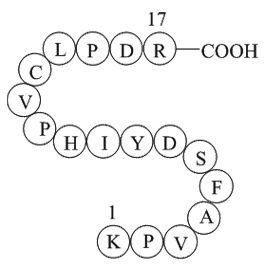
Conclusions Introduction Bioinformatics analysis shows that there are about 300,000 G-rich sequences in human genome if searching with the consensus sequence (G3+N1-7G3+N1-7G3+N1-7G3+) [1], and their localizations are non-random. These G-rich sequences always localize in functional regions, su
br Materials and methods br Acknowledgments
2022-08-10
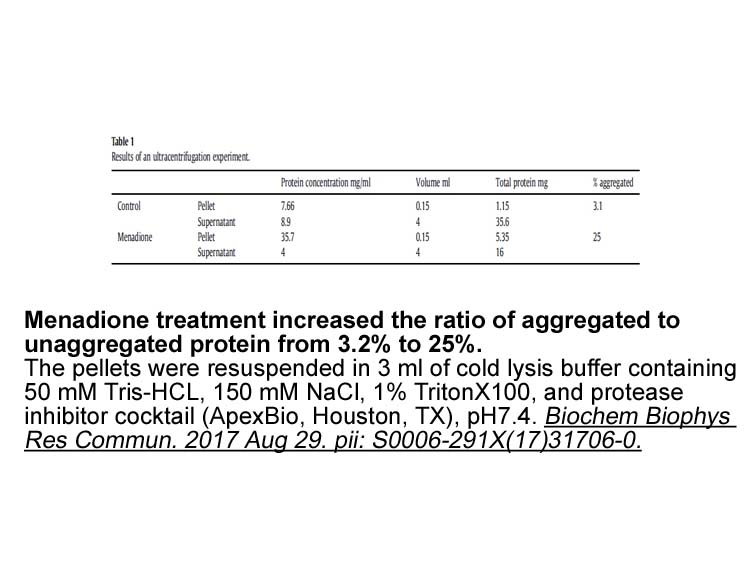
Materials and methods Acknowledgments We are grateful for financial support from the National Natural Science Foundation of China (Grants No. 81661148046 and 81773762, China) and the “Personalized Medicines—Molecular Signature-based Drug Discovery and Development”, Strategic Priority Research
However the clinical development of was
2022-08-10
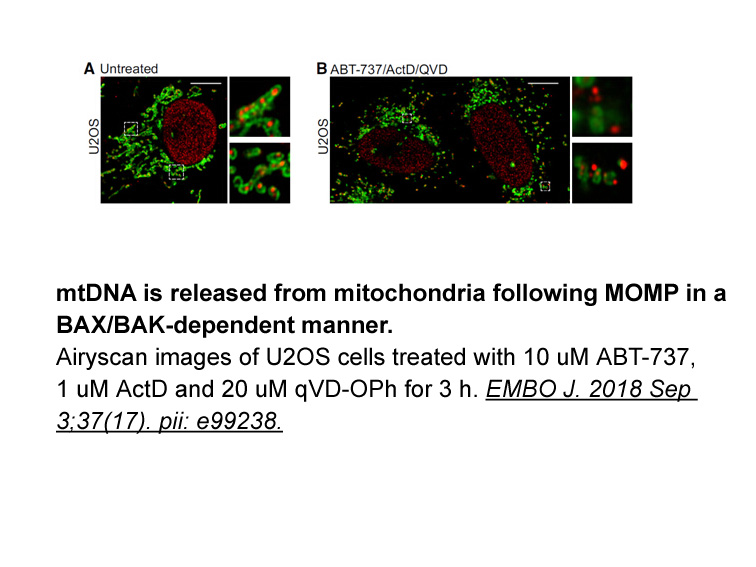
However, the clinical development of was terminated in 2013 due to the concerns over liver toxicity, raising important questions regarding the long-term safety and viability of targeting GPR40 and, more specifically, about our understanding of the pharmacobiology and signaling spectrum of this recep
br Declaration of interest br Acknowledgments
2022-08-10
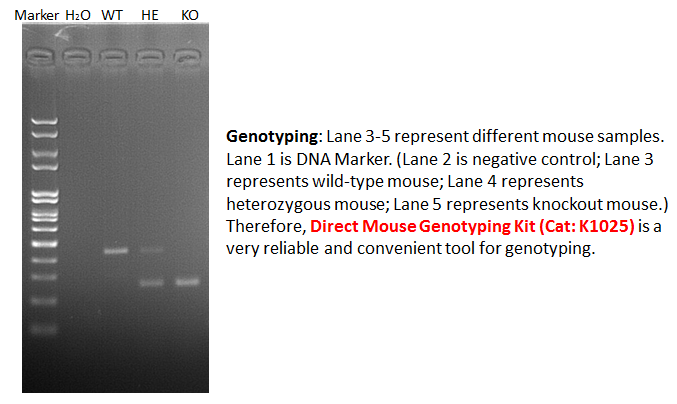
Declaration of interest Acknowledgments This work was supported by grants from the Polish National Science Centre (PRELUDIUM grant no. 2013/11/N/NZ5/00270) and the European Commission FP7 Project Beta-JUDO (grant number 279 153), European Union EIT Health project DeTecT2D, Swedish Diabetes A
br Declarations of interest br Founding information
2022-08-10
Declarations of interest Founding information This work was partially supported by the New Energy and Industrial Technology Development Organization (NEDO) Japan [grant number P03043]; and Grants-in-Aid for Scientific Research [grant number 16H00738 to H.M.] from the Japan Society for the Prom
Cux is a cell cycle dependent transcription repressor
2022-08-09
Cux1 is a Lurasidone HCl dependent transcription repressor that is aberrantly expressed in the Pkd1 null, Pkd1CD, and cpk mouse models of PKD, as well as in human ADPKD cells (Vanden Heuvel et al., 1996; Sharma et al., 2005; Paul et al., 2011; Alcalay et al., 2008). In Pkd1 null mice and in human AD
br Conclusions br Acknowledgments This work was financially
2022-08-09
Conclusions Acknowledgments This work was financially supported partly by Shanghai Pujiang Talent Project (No.: 08PJ14017), the National Natural Science Foundation of China (Nos.: 20771029 and 91013001) and Shanghai Leading Academic Discipline Project (No. B108). Soluble guanylate cyclase (
Activity of compound in rat brain tissue highlights
2022-08-09
Activity of compound 10 in rat Fesoterodine Fumarate australia tissue highlights the potential to use this new class of allosteric sGC inhibitors to study the role of the NO—sGC—cGMP signalling pathway in the brain. Reducing amounts of cGMP in cells would have implications in downstream signalling
Activity of compound in rat brain tissue highlights
2022-08-09
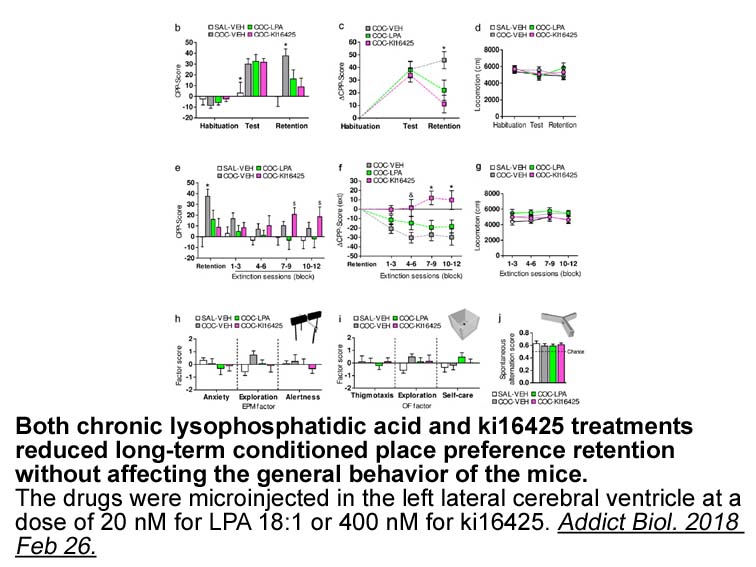
Activity of compound 10 in rat alvocidib tissue highlights the potential to use this new class of allosteric sGC inhibitors to study the role of the NO—sGC—cGMP signalling pathway in the brain. Reducing amounts of cGMP in cells would have implications in downstream signalling proteins, such as cGMP
br Conclusions Beta cell specific expression in human islets
2022-08-09
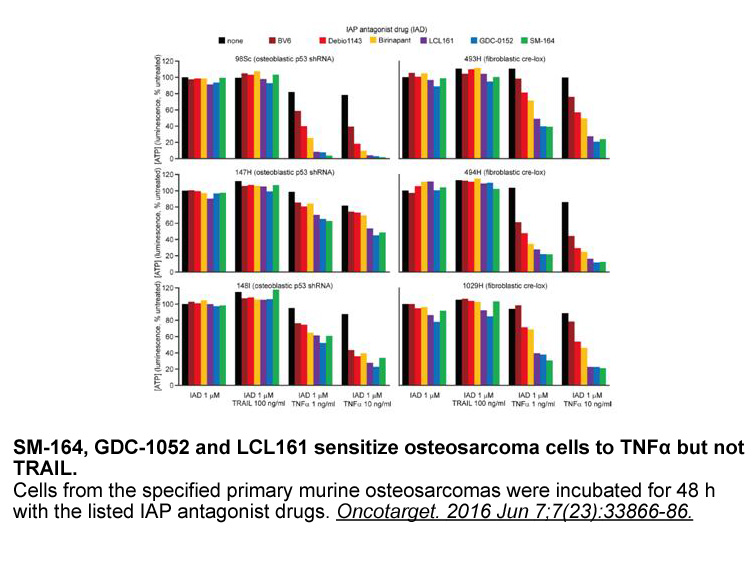
Conclusions Beta cell-specific expression in human islets of DGCR2, GBF1, GPR44 and SerpinB10 has not previously been described, although the proteins have partly been characterized in other contexts not related to beta nitric oxide synthase inhibitor or diabetes. DGCR2, GPR44 and SerpinB10 were
8132 records 415/543 page Previous Next First page 上5页 411412413414415 下5页 Last page